
Biodegradable Film Plastic Granulator Machine: A Practical Buyer’s Guide for Modern Recycling Lines
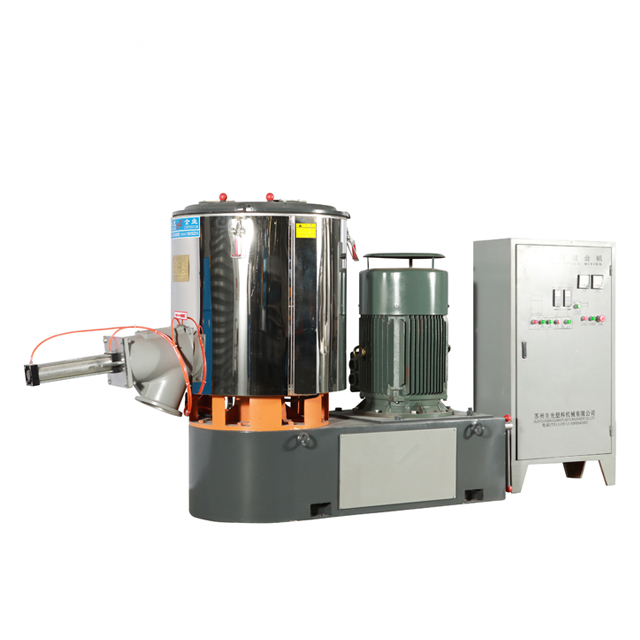
The rapid growth of biodegradable plastics is reshaping film production, packaging, and recycling. As more converters and recyclers handle PLA, PBAT, PBS, and starch-based films, the demand for a biodegradable film plastic granulator machine designed specifically for these materials has surged.
But not every granulator or recycling extruder built for traditional PE/PP film can handle biodegradable films efficiently—or safely. Their lower thermal stability, different rheological behavior, and sensitivity to moisture mean you need to be far more deliberate when selecting equipment.
This guide walks you through:
● What makes biodegradable film recycling different
● Key process steps in a biodegradable film plastic granulator line
● Critical selection criteria (mechanical, process, energy, quality)
● How to match machine configuration to your real-world feedstock
● Operational best practices to maximize pellet quality and line uptime
All in straightforward, engineer-to-engineer language—no brand-bashing, just categories and features that actually matter.
1. What Is a Biodegradable Film Plastic Granulator Machine?
A biodegradable film plastic granulator machine is a specialized recycling system that takes post-industrial or post-consumer biodegradable films and converts them into reusable plastic pellets. These pellets can be reintroduced into film blowing, casting, thermoforming, or injection processes.
Typically, a line includes:
1 Feeding & Conveying – Belt conveyors, roll feeders, or compactor–feeders to handle light, fluffy film waste.
2 Size Reduction & Densification – Shredders or compaction cutters to increase bulk density and ensure stable feed.
3 Plasticizing & Degassing (Extrusion) – Single or twin-screw extruder designed to process biodegradable resins without thermal degradation.
4 Filtration – Melt filters to remove contaminants and gels.
5 Pelletizing – Strand, water-ring, or underwater pelletizers to form uniform pellets.
6 Drying & Cooling – To protect pellet quality and avoid hydrolytic degradation.
What makes this equipment distinct is its process window: it must be optimized for lower processing temperatures, narrower residence time, and careful moisture management compared to conventional polyolefin film recycling.
2. Why Biodegradable Film Is Not “Just Another Plastic”
Treating biodegradable film like standard PE/PP scrap is a fast way to create yellowed, brittle pellets and high reject rates.
Common biodegradable film types:
● PLA (Polylactic Acid) – Sensitive to heat and moisture; hydrolyzes easily.
● PBAT (Polybutylene Adipate Terephthalate) – More flexible, often used in blends for compostable bags.
● PBS (Polybutylene Succinate) and PCL (Polycaprolactone) – Biodegradable aliphatic polyesters.
● Starch-based Blends – Typically compounded with PLA or PBAT.
Key challenges versus traditional film:
● Lower thermal stability – Degrades at elevated temperature and long residence times.
● Moisture sensitivity – Requires proper pre-drying or integrated degassing.
● Narrow process window – Small margin between “under-melted” and “degraded.”
● Potential odor and color changes when over-processed.
As a result, a biodegradable film plastic granulator machine must allow tight control of temperature, screw speed, residence time, and vacuum, plus ensure the feedstock is handled gently from the first step.
3. Core Process Flow of a Biodegradable Film Granulation Line
Understanding the process sequence will help you evaluate machine configurations.
3.1 Feeding & Pre-Processing
Biodegradable films are often thin, stretchy, and low bulk density. Typical feed forms:
● Edge trims from film lines
● Start-up rolls and off-spec rolls
● Printed or laminated compostable bags
● Post-consumer collection (where infrastructure exists)
Recommended features:
● Automatic belt conveyor with metal detector
● Roll feeder or nip feeder for continuous edge trims
● Compactor or cutter–compactor to densify film and remove some volatiles
3.2 Plasticizing & Degassing
The heart of the system is the extruder:
● Screw design: Gentle conveying zones and lower shear mixing elements to avoid over-shearing PLA/PBAT.
● Barrel temperature profile: Optimized to melt the polymer quickly without overheating the melt.
● Degassing: One or two vacuum venting ports to remove moisture and residual volatiles.
3.3 Filtration & Pelletizing
Once plasticized:
● Melt filter removes gels, paper fibers, small metals, and contaminants.
● Pelletizing forms pellets suitable for reprocessing:
○ Strand pelletizing – Simple and robust; good for smaller outputs.
○ Water-ring pelletizing – Compact, commonly used for film recycling.
○ Underwater pelletizing – Excellent for high throughput and uniform pellet shape, but more complex.
4. Key Selection Criteria: How to Choose the Right Machine
Below are the main dimensions you should evaluate when selecting a biodegradable film plastic granulator machine. Use them as a checklist when comparing equipment categories and configurations.
4.1 Material Compatibility & Process Window
Biodegradable film resins are not all identical. Start by mapping your material portfolio:
● What percentage is PLA-based vs PBAT/PBS blends?
● Are there starch-rich or fiber-filled grades?
● Are there adhesives, inks, or coatings, such as compostable print layers?
Selection criteria:
Temperature Control
○ Multiple heating zones with fine control (typically ±1–2 °C).
○ Accurate melt temperature monitoring.
○ Ability to run at lower melt temperatures than standard polyolefins.
Screw Design Flexibility
○ Options for customized screw elements (conveying vs mixing).
○ Gentle kneading blocks rather than aggressive high-shear elements.
○ Optimized L/D ratio to minimize residence time without sacrificing melting efficiency.
Degassing Performance
○ One or two vacuum venting ports.
○ Proper vent design to avoid material carryover.
○ Adequate vacuum pumps sized for moisture loads typical of biodegradable films.
Practical tip: If you routinely process films with high residual moisture (e.g., post-consumer compostable bags), prioritize extruders with strong degassing and consider integrated or offline drying.
4.2 Throughput, Screw Size, and Future Capacity
Right-sizing the machine is critical:
● Nominal throughput (kg/h) should match:
○ Your current scrap volume
○ Projected growth over 3–5 years
○ Desired operating schedule (single vs multi-shift)
Key points:
● Screw diameter and L/D ratio determine the realistic throughput range.
● Running the machine consistently at 80–90% of its designed capacity is usually optimal.
● Consider modular upgrades (e.g., higher screw speed, larger motor, or additional feeding ports) if you expect future increases.
Selection checklist:
● Minimum and maximum throughput range for biodegradable films
● Recommended operating window for stable pellet quality
● Overload protection and torque monitoring
4.3 Feeding & Densification System
Biodegradable films are usually light and fluffy—stable feeding is a known bottleneck.
Common feeding configurations:
Belt Conveyor + Compactor
○ Good for mixed scrap: loose film, skeletal waste, small rolls.
○ The compactor pre-heats and densifies the material, reducing air and increasing throughput stability.
Roll Feeder / Nipping Station
○ Ideal for edge trims and full rolls.
○ Ensures continuous and controlled feeding directly into the extruder or compactor.
Gravimetric Feeding
○ Load cells to control feeding rate precisely.
○ Important when you combine biodegradable film with other materials or masterbatches.
For biodegradable films, prioritize:
● Systems that minimize mechanical stress and temperature spikes in the compaction area.
● Robust anti-blocking design, as some biodegradable films may become tacky under pressure.
4.4 Melt Filtration & Contamination Management
Even post-industrial films can carry contaminants: paper, dust, aluminum traces from laminates, or ink residues.
Filtration options:
● Manual screen changers – Low-cost, suitable for relatively clean scrap and lower throughput.
● Continuous or back-flush filters – Maintain stable pressure and allow long runs without shutdown.
● Automatic self-cleaning filters – Best for higher contamination levels or high-output lines.
Key criteria:
● Filtration fineness (micron rating) aligned with your downstream product requirements.
● Filtration area sufficient to avoid excessive pressure build-up.
● Pressure monitoring and alarms to protect the extruder and ensure consistent melt quality.
4.5 Pelletizing System: Matching Pellets to Your Application
The pelletizing method influences pellet shape, size distribution, and handling:
Strand Pelletizing
○ Plastic melt extruded as strands, cooled in a water bath, and cut by a pelletizer.
○ Pros: Simple, easy to maintain, tolerant to viscosity fluctuations.
○ Cons: More floor space; manual intervention if strands break.
Water-Ring Pelletizing
○ Melt discharged through a die; rotating knives cut pellets in a water ring chamber.
○ Pros: Compact, widely used for film recycling; good pellet uniformity.
○ Cons: More sensitive to melt pressure and viscosity.
Underwater Pelletizing
○ Pellets formed and solidified under water immediately at the die face.
○ Pros: Excellent pellet uniformity; good heat removal; ideal for high throughput.
○ Cons: Higher investment; more complex operation and maintenance.
For biodegradable films:
● Ensure good control of water temperature, as overheating can accelerate degradation.
● Consider pellet drying efficiency, since residual moisture can harm downstream processing and material properties.
4.6 Energy Efficiency and Sustainability Metrics
If your business is investing in biodegradable materials to improve sustainability, your granulation line should reflect the same philosophy.
Evaluate:
● Specific energy consumption (kWh per kg of pellets) at typical operating conditions.
● Use of high-efficiency motors and drives.
● Options for heat recovery or optimized barrel insulation.
Also consider:
● Overall carbon footprint of the recycling loop.
● Ability to connect to energy monitoring systems or factory-wide MES for real-time KPIs.
4.7 Automation, Control, and Data
Modern B2B customers and plant managers expect more than just a mechanical machine—they expect smart control and traceability.
Look for:
● PLC-based control system with a user-friendly HMI.
● Recipe management for different biodegradable film grades.
● Real-time monitoring of:
○ Screw speed and torque
○ Melt temperature and pressure
○ Vacuum level at degassing zones
○ Energy consumption
● Remote diagnostics capability for faster troubleshooting.
This level of automation improves repeatability, reduces operator dependency, and supports quality documentation for your customers.
4.8 Safety, Compliance, and Certification
A biodegradable film plastic granulator machine must meet applicable safety and industry standards. When evaluating equipment categories, check for:
● Compliance with major machine directives and safety standards relevant to your region.
● Emergency stop circuits, guards, and interlocks.
● Clearly labeled lockout/tagout points.
● Dust and fume extraction options for safe air quality.
If you serve food packaging, medical, or certified compostable applications, additional documentation on materials of construction and process cleanliness may be required.
5. Matching Machine Configuration to Your Use Case
To avoid over- or under-specifying your system, start from your real-world scenario and work backward.
Scenario A: Film Converter with Mainly Clean, Post-Industrial Scrap
● Feedstock: Edge trims, off-spec rolls of PLA/PBAT films, minimal contamination.
● Priority: Stable refeeding into film lines, high pellet quality, cost-effectiveness.
Recommended features (category level):
● Medium-output extruder with optimized screw for PLA/PBAT.
● Compactor–feeder for consistent feed and partial pre-drying.
● Manual or semi-continuous filter (depending on print/coating level).
● Water-ring or strand pelletizing for flexible operations.
● Basic automation with recipe control.
Scenario B: Recycling Facility Handling Mixed Biodegradable Films
● Feedstock: Mixed compostable bags, supermarket collection, potential moisture and contamination.
● Priority: Strong degassing, filtration robustness, contamination tolerance.
Recommended features:
● Higher L/D extruder with two degassing zones.
● Aggressive yet controlled filtration: continuous or self-cleaning filter.
● Pre-shredding plus compactor; optional pre-dryer for heavily soiled material.
● Underwater or robust water-ring pelletizing for steady pellet quality.
● Advanced filtration pressure control and automated screen change.
Scenario C: Compounder Producing High-Value Biodegradable Compounds
● Feedstock: Virgin + recycled biodegradable resins, fillers (starch, talc, fibers), additives.
● Priority: High melt homogeneity, precise recipe control, consistent pellet properties.
Recommended features:
● Co-rotating twin-screw extruder for superior mixing.
● Multiple feeding points: main feed, side feeders for fillers, liquid injection.
● Highly controllable degassing and melt temperature.
● Precise gravimetric feeding for all components.
● Underwater pelletizing for highly uniform pellets.
● Advanced data logging and quality traceability.
6. Operational Best Practices for Biodegradable Film Granulation
Even the best machine can’t compensate for poor operating discipline. To protect your biodegradable materials and ensure consistent output quality, consider these best practices:
Moisture Management
○ Store raw scrap in dry conditions.
○ Use pre-drying for high-moisture feed, especially PLA- or starch-rich formulations.
○ Monitor moisture content periodically.
Temperature Discipline
○ Avoid “just crank up the temperature” thinking: it may temporarily solve a feeding or melting issue at the cost of polymer degradation.
○ Follow material-specific temperature profiles and adjust gradually.
Residence Time Control
○ Avoid long dwell times in the barrel during stoppages—purge with compatible material if needed.
○ Keep screw speed in a range that balances shear and throughput without causing over-heating.
Regular Filtration Maintenance
○ Track pressure before and after filters to optimize screen change intervals.
○ Analyze filters removed from the system to understand contamination trends.
Pellet Quality Checks
○ Basic tests: visual inspection, color comparison, bulk density.
○ For critical applications: MFI (Melt Flow Index), mechanical properties of test specimens.
Documentation and Traceability
○ Maintain run logs: batch ID, material mix, temperature profile, screw speed, vacuum level.
○ This data supports troubleshooting and gives customers confidence in your recycled content.
7. Summary: A Structured Approach to Selecting a Biodegradable Film Plastic Granulator Machine
Choosing the right biodegradable film plastic granulator machine is not about chasing the highest output or the lowest price. It’s about fitting process capabilities to your specific materials and business case.
Use this condensed checklist as a starting point:
Define Your Materials
○ PLA/PBAT/PBS ratios, starch content, coatings, contamination levels.
Clarify Your Objectives
○ Internal re-use vs. external sales, pellet quality requirements, target throughput.
Evaluate Core Machine Features
○ Extruder type and screw design for biodegradable polymers.
○ Degassing capacity and temperature control precision.
○ Feeding and densification suitable for film scrap behavior.
Match Filtration & Pelletizing to Quality Needs
○ Filtration fineness and automation level vs contamination.
○ Strand, water-ring, or underwater pelletizing based on application and capacity.
Consider Lifecycle Factors
○ Energy efficiency, ease of maintenance, automation and data integration.
○ Safety, compliance, and available technical support.
With a structured evaluation based on these criteria, you can confidently invest in a biodegradable film plastic granulator machine that not only processes today’s film scrap, but also supports your transition to a more circular, sustainable plastics portfolio over the long term.
mai:zhuo.li@zextrusion.com
factory address: No.135 Shiba Road, Taowu Industrial Park, Jiangning District, Nanjing
office address: Room 1408, Block C4, Vanke Duhui World, No. 31, Lvdu Avenue, Jiangning District, Nanjing