
Pet Plastic Recycling Lab Extruder: How to Choose the Right System for High-Value Recycling
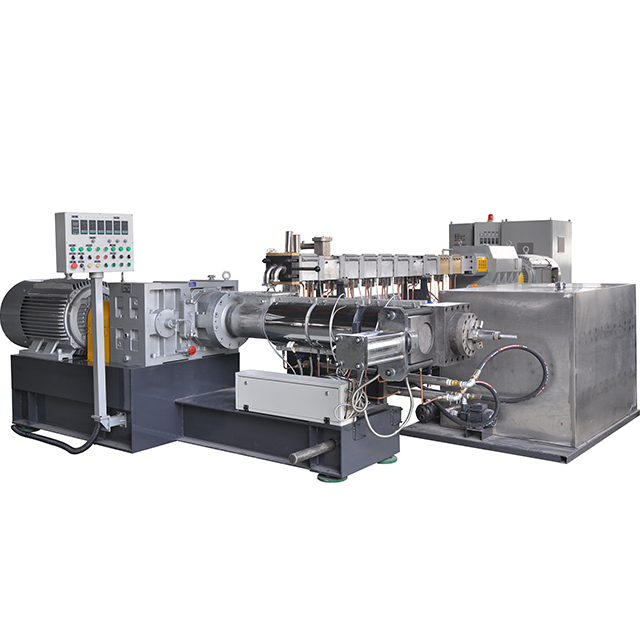
As brands, converters, and recyclers race to meet ambitious sustainability targets, PET plastic recycling lab extruders are becoming central tools in R&D labs and pilot plants. Instead of treating lab extruders as small versions of production machines, leading organizations view them as strategic assets that de-risk innovation, validate new formulations, and accelerate scale-up.
This article explains, in clear business language, how a Pet Plastic Recycling Lab Extruder fits into a modern recycling workflow, what technical features actually matter, and how decision-makers can build a robust selection checklist. It adopts a vendor-neutral perspective, focusing on categories and capabilities rather than specific brands or models.
1. What Is a Pet Plastic Recycling Lab Extruder?
A Pet Plastic Recycling Lab Extruder is a compact, laboratory-scale extrusion system designed to process post-consumer or post-industrial PET (polyethylene terephthalate) into pellets, strands, or profiles for testing and formulation work.
It typically sits in:
● Polymer R&D laboratories
● Packaging and bottle manufacturers’ technical centers
● Recycling companies’ pilot lines
● Universities and applied research institutes
Instead of handling tons per hour like a full-scale recycling line, a lab extruder works with small, precisely measured batches. This allows engineers and scientists to:
● Evaluate different PET feedstocks (bottle flakes, preforms, fibers, films)
● Test additive packages for color, IV retention, or mechanical properties
● Study the impact of moisture, temperature, and residence time
● Generate sample pellets for molding, film blowing, or fiber spinning tests
From a business point of view, the lab extruder is a risk-reduction tool: it helps teams make data-driven decisions before committing to large capital expenditures.
2. Why PET Recycling Needs Specialized Lab Extruders
PET is not just another thermoplastic. Its sensitivity to moisture and its viscosity behavior under temperature and shear make it more demanding than many commodity polymers.
Key PET-specific challenges:
1 Hydrolytic degradation
Residual moisture in PET leads to chain scission during melting. This lowers intrinsic viscosity (IV), which directly affects mechanical strength and performance. A lab extruder for PET must therefore handle efficient drying and/or inline degassing.
2 IV control and measurement
For bottle-grade recycled PET (rPET), IV is a critical quality parameter. Lab extruders must process PET in ways that minimize IV loss, and test setups must allow consistent sampling for IV measurement and rheology.
3 Contamination and color
Post-consumer PET may contain labels, adhesives, multilayer structures, and other polymers (e.g., polyolefins). Lab trials help evaluate how well filtration, compatibilizers, and process conditions can manage these impurities.
4 Food-contact and regulatory constraints
If the end use is food or beverage packaging, the recycling process may need to comply with standards or be assessed under food-contact regulations in various markets. The lab extruder is often used to simulate critical steps such as decontamination, high-temperature residence, and vacuum treatment.
A general-purpose lab extruder for polymers may not provide the necessary drying capacity, vacuum level, or temperature uniformity required for high-quality PET recycling experiments. This is why a PET-focused configuration is often justified.
3. Typical Lab Workflow for PET Plastic Recycling
Understanding a typical workflow helps clarify where a Pet Plastic Recycling Lab Extruder creates value.
3.1 Feedstock Preparation
Collection and sorting
PET feedstocks include bottle flakes, thermoformed packaging, fibers, strapping, or film scraps. In a lab, these may arrive pre-sorted by color, origin, or contamination level.
Washing and drying
Even in a lab, basic washing and drying are necessary to mimic industrial conditions. Samples are often washed, rinsed, dried, and sieved to a controlled particle size.
Pre-drying or crystallization
Amorphous PET flakes may be crystallized and dried in a separate lab dryer to reduce moisture content to acceptable levels (often below a few hundred ppm, depending on the process).
3.2 Extrusion Trials
Once the feedstock is prepared, the PET is processed on the lab extruder:
● Feeding: Gravimetric or volumetric feeders dose flakes, pellets, or additives.
● Plasticizing & melting: Barrel zones are heated to PET-suitable temperatures, typically in the 260–290°C range depending on grade and formulation.
● Degassing: One or more venting ports (often with vacuum) remove volatiles and residual moisture.
● Additive incorporation: Masterbatches for color, chain extenders, compatibilizers, or impact modifiers can be added via side feeders or main feed.
● Filtration: Melt filters or screens capture solid contaminants to evaluate cleanliness and pressure build-up.
● Pelletizing or strand extrusion: The extrudate is then formed into pellets or strands for downstream testing.
3.3 Testing and Evaluation
The value of a Pet Plastic Recycling Lab Extruder is realized when data is generated:
● Intrinsic viscosity (IV) and molecular weight
● Mechanical properties (tensile, impact, flexural tests)
● Color and haze measurements
● Contamination counts and filter pressure data
● Food-contact simulation results, where applicable
The lab data then supports business decisions:
● Whether a new waste stream is suitable for food-grade rPET
● Whether a new additive package is justified economically
● How process settings should be configured at pilot or production scale
4. Core Technical Choices: Single-Screw vs Twin-Screw
One of the first strategic decisions is the type of lab extruder. While individual designs vary, the main categories are:
4.1 Single-Screw Lab Extruders
Single-screw systems are closer to many traditional production lines and can be simpler to operate.
Advantages:
● Lower mechanical complexity and often lower initial cost
● Straightforward operation and maintenance
● Good for relatively clean and homogeneous feedstocks
● Easier baseline for scaling to single-screw production lines
Limitations:
● Less intensive mixing compared to co-rotating twin-screw designs
● Less flexible for handling high contamination or complex additive packages
● Limited flexibility for process “re-engineering” through screw element combinations
Single-screw lab extruders can be a strong fit when the PET feedstock is relatively clean bottle flakes and the main goal is to benchmark IV retention, filtration behavior, or basic pellet properties.
4.2 Twin-Screw Lab Extruders
Co-rotating twin-screw lab extruders are often favored in development environments.
Advantages:
● Superior mixing and dispersive capability
● Greater flexibility with modular screw elements
● Enhanced degassing performance with carefully designed venting zones
● Easier integration of multiple feeding points (flakes, pellets, additives, liquids)
Limitations:
● Higher capital and maintenance costs
● Greater operator learning curve
● More complex scale-up calculations
For complex rPET formulations, such as blends with other polymers, addition of chain extenders, or processing of heavily contaminated feedstock, twin-screw systems often provide the process window and flexibility that R&D teams need.
4.3 How Decision-Makers Can Choose
In practice, organizations sometimes operate both: a single-screw lab extruder to simulate a production environment and a twin-screw extruder as a flexible development platform. When budget restricts the choice to one system, teams should clarify whether the primary goal is simulation or innovation:
● Simulation-oriented: closer alignment with existing production lines, often single-screw.
● Innovation-oriented: maximum flexibility for new formulations and challenging feedstocks, often twin-screw.
5. Key Selection Criteria for a Pet Plastic Recycling Lab Extruder
Decision-makers can evaluate options using a structured checklist. Below is a practical framework grouped into categories.
5.1 Process Capability
Temperature range and control
○ Barrel zones able to reach PET-appropriate temperatures (typically up to 300°C or slightly higher for safety margin).
○ Stable temperature profiles, with tight control to avoid hot spots and degradation.
Screw speed and torque
○ Sufficient torque for highly viscous PET melts or blends.
○ Broad speed range to explore the impact of shear on IV and properties.
Degassing and vacuum
○ Number and location of venting ports.
○ Achievable vacuum level and stability.
○ Ease of cleaning venting zones when processing contaminated material.
Throughput
○ Reflects realistic lab productivity without oversizing.
○ Sufficient material for all required tests (mechanical, color, IV, etc.) from a single run.
5.2 Material Handling and Feeding
Flexibility in feed forms
○ Capability to handle flakes, pellets, regrind, and powders.
○ Optional side feeders for additives or secondary polymers.
Gravimetric feeding
○ High-accuracy feeding to generate reliable, repeatable data.
○ Multiple feeders to dose different streams independently.
Compatibility with existing lab equipment
○ Ability to integrate with upstream dryers, crystallizers, and downstream pelletizers or strand baths.
5.3 Quality, Analytics, and Data Integration
Process monitoring
○ Real-time monitoring of melt pressure, melt temperature, screw speed, and motor load.
○ Data logging for later analysis of trends and scale-up modeling.
Sampling convenience
○ Easy sampling points for melt or strand samples.
○ Consistent pelletizing to avoid variability in downstream tests.
Integration with lab software
○ Export of process data in formats compatible with existing LIMS or data analysis tools.
○ Optional connectivity for remote monitoring or integration in digital R&D platforms.
5.4 Engineering, Safety, and Compliance
Robust mechanical design
○ Durable barrel materials and screw metallurgy suitable for PET and abrasive contaminants.
○ Reliable gearboxes and drive systems built for frequent start/stop cycles typical of labs.
Safety features
○ Guards, interlocks, and emergency stops.
○ Clear visibility of moving parts and hot zones for safe operation and training.
Standards and compliance
○ Electrical and safety design aligned with regional standards.
○ Documentation and traceability important for audits, especially in food-contact recycling studies.
5.5 Ease of Use and Clean-Down
Changeover speed
○ Simple screw removal and barrel opening mechanisms.
○ Quick cleaning between different PET grades, colors, or additive formulations.
Operator training
○ Intuitive controls and HMI (human-machine interface).
○ Clear operating procedures and troubleshooting guides.
Spare parts and support
○ Availability of wear parts such as screws, barrel liners, and filters.
○ Service support and training options, including remote support where possible.
5.6 Total Cost of Ownership (TCO)
Beyond the purchase price, organizations should consider:
● Energy consumption per kg of processed PET
● Frequency and cost of maintenance
● Expected lifetime of critical components
● Downtime risk and its impact on project schedules
A Pet Plastic Recycling Lab Extruder that is slightly more expensive but significantly reduces trial errors, downtime, or scrap can be more economical over its lifecycle.
6. Application Scenarios Where a Lab Extruder Pays Off
To justify investment, decision-makers often map out concrete use cases. Common examples include:
6.1 Qualifying New PET Waste Streams
Recyclers and converters frequently assess new sources of PET waste—different regions, collection schemes, or industrial scrap. A lab extruder enables them to:
● Simulate their standard recycling sequence
● Evaluate IV loss, color drift, and contamination
● Decide whether a new stream is suitable for high-value applications
6.2 Developing Food-Grade rPET
For food and beverage packaging, recycled PET must meet strict safety and performance criteria. Lab-scale trials allow:
● Exploration of decontamination strategies (e.g., combinations of heat, vacuum, and residence time)
● Studies on how process conditions affect potential contaminants’ migration behavior
● Generation of data packages to support regulatory assessments
6.3 Adding Functional Additives
Packaging designers may wish to:
● Incorporate chain extenders to restore IV
● Add impact modifiers or slip agents
● Adjust color and aesthetics
A Pet Plastic Recycling Lab Extruder is ideal for testing dosage levels, evaluating dispersion quality, and checking that properties stay within target windows.
6.4 Designing rPET Blends
Blends such as:
● rPET with virgin PET
● rPET with other polymers for specific performance targets
● rPET with barrier materials or tie layers
can be evaluated quickly at lab scale. This reduces the risk of costly full-scale trials that fail to meet processing or performance expectations.
7. Best Practices to Maximize E-E-A-T in Lab Operations
E-E-A-T—Experience, Expertise, Authoritativeness, and Trustworthiness—is not only a search engine concept; it also describes how leading organizations operate their PET recycling labs.
7.1 Experience: Building a Robust Trial History
Organizations can strengthen their internal “experience base” by:
● Recording every trial with clear metadata (feedstock, drying conditions, extruder settings, additives, test results).
● Documenting both success and failure; unsuccessful formulations are valuable learning data.
● Maintaining a centralized knowledge base accessible to R&D, production, and quality teams.
7.2 Expertise: Leveraging Polymer Science and Processing Know-How
Technical expertise is demonstrated in:
● Understanding PET crystallinity, IV behavior, and degradation mechanisms.
● Connecting lab extruder parameters to molecular-level changes.
● Translating lab learnings into robust process windows at pilot and production scales.
This combination of polymer science and extrusion engineering transforms lab data into reliable design rules.
7.3 Authoritativeness: Aligning with Standards and External Benchmarks
A lab gains authority when its methods align with recognized standards and best practices, including:
● Using standardized tests for IV, mechanical properties, and color.
● Referencing relevant industry norms and food-contact frameworks when designing decontamination trials.
● Participating in collaborative projects or round-robin tests with external partners to benchmark results.
7.4 Trustworthiness: Transparency and Traceability
Trustworthiness is supported by:
● Clear, auditable records of every trial and test.
● Transparent handling of out-of-spec data, including root cause analysis.
● Cross-checks between lab, pilot, and production data to ensure consistency.
A Pet Plastic Recycling Lab Extruder becomes a trusted instrument when the data it produces is reliable enough to support investment and compliance decisions.
8. Implementation Roadmap for Decision-Makers
To move from interest to implementation, organizations can follow a staged roadmap:
Clarify objectives
○ Define primary use cases: new feedstock qualification, food-grade development, additive evaluation, or blend design.
○ Specify target markets and regulatory environments.
Define performance and technical requirements
○ Set throughput and temperature range targets.
○ Decide between single-screw and twin-screw configurations, or a combination.
○ Outline data acquisition and integration needs.
Create a formal selection matrix
○ List criteria such as process capability, ease of use, safety, and TCO.
○ Weight each criterion according to business priorities.
Evaluate solution categories
○ Compare different extruder categories (basic single-screw, advanced twin-screw, modular systems with extensive add-ons).
○ Consider whether future upgrades (e.g., new feeders, additional venting, upgraded control systems) will be needed.
Plan lab layout and infrastructure
○ Ensure adequate power, ventilation, and safety infrastructure.
○ Integrate dryers, crystallizers, and downstream equipment logically around the extruder.
Establish operating and validation protocols
○ Prepare SOPs for start-up, shutdown, cleaning, and emergency handling.
○ Define routines for calibration and verification of critical sensors.
○ Align test methods with internal or external standards.
Train and cross-train personnel
○ Combine hands-on operator training with theoretical sessions on PET properties and extrusion science.
○ Encourage cross-functional participation from R&D, production, and quality teams.
This structured approach ensures that a Pet Plastic Recycling Lab Extruder is not just a piece of equipment, but a strategic platform for innovation and risk management.
9. FAQ: Pet Plastic Recycling Lab Extruder
Q1: What is the main purpose of a Pet Plastic Recycling Lab Extruder?
A Pet Plastic Recycling Lab Extruder is designed to process small batches of PET waste into usable pellets or strands for testing. Its main purpose is to validate new feedstocks, formulations, and process settings before scaling up to pilot or full production lines.
Q2: How is a PET-focused lab extruder different from a generic polymer lab extruder?
While a generic extruder can melt many thermoplastics, a PET-focused lab extruder typically offers higher operating temperatures, stronger degassing capability, and better control of residence time and shear. These features are critical for preserving PET intrinsic viscosity and managing moisture-induced degradation.
Q3: Should a company choose a single-screw or twin-screw Pet Plastic Recycling Lab Extruder?
The choice depends on priorities. If the goal is mainly to simulate existing single-screw production lines with relatively clean PET feedstock, a single-screw lab extruder can be appropriate. If the focus is on innovation—complex blends, heavy contamination, or extensive additive use—a co-rotating twin-screw system usually offers more flexibility and mixing capability.
Q4: What throughput is typical for a Pet Plastic Recycling Lab Extruder?
Throughput varies widely depending on screw diameter and configuration, but laboratory systems are generally designed to produce enough material for complete testing while avoiding excessive material consumption. The exact rate is less important than the ability to run stable, repeatable conditions that represent real industrial processes.
Q5: How does a lab extruder help with food-grade rPET development?
For food-contact applications, the Pet Plastic Recycling Lab Extruder allows teams to simulate critical steps such as high-temperature treatment, vacuum degassing, and residence time control. The resulting pellets can be evaluated using migration testing, intrinsic viscosity measurement, and other analyses that support regulatory assessments for food-grade rPET.
Q6: What kind of additives can be tested on a Pet Plastic Recycling Lab Extruder?
Common additives include chain extenders, stabilizers, compatibilizers, impact modifiers, and color masterbatches. The lab extruder allows controlled dosing and mixing of these additives so that their effect on IV, mechanical properties, and color can be evaluated quickly and reliably.
Q7: How important is drying for PET before lab extrusion?
Drying is critical. Residual moisture in PET leads to molecular chain scission during melting, which reduces intrinsic viscosity and weakens the material. In a lab environment, PET is typically crystallized and dried before feeding, and the Pet Plastic Recycling Lab Extruder often includes venting and vacuum to remove remaining moisture.
Q8: Can data from a lab extruder be used directly for production scale-up?
Yes, but with careful interpretation. Lab data provides trends and relative comparisons rather than exact production settings. A sound scale-up strategy uses dimensionless numbers, residence time distributions, and rheological data to translate Pet Plastic Recycling Lab Extruder results into realistic operating windows for larger lines.
Q9: How should a company evaluate the total cost of ownership of a lab extruder?
Beyond the purchase price, decision-makers should consider energy consumption, maintenance cycles, spare parts availability, operator training costs, and potential downtime. A robust Pet Plastic Recycling Lab Extruder that generates reliable data and minimizes trial failures often pays back its investment through faster development and fewer production issues.
Q10: Is a Pet Plastic Recycling Lab Extruder only relevant for large recyclers?
Not at all. Brand owners, converters, and even medium-sized recyclers can benefit from having in-house lab extrusion capability. It enables faster decision-making, better control of material quality, and closer collaboration between R&D and production, all of which are essential in a market where recycled PET quality and availability are increasingly strategic.
mai:zhuo.li@zextrusion.com
factory address: No.135 Shiba Road, Taowu Industrial Park, Jiangning District, Nanjing
office address: Room 1408, Block C4, Vanke Duhui World, No. 31, Lvdu Avenue, Jiangning District, Nanjing