
EVA Underwater Cutting Pelletizing Machine: A Practical Buying Guide for Processors
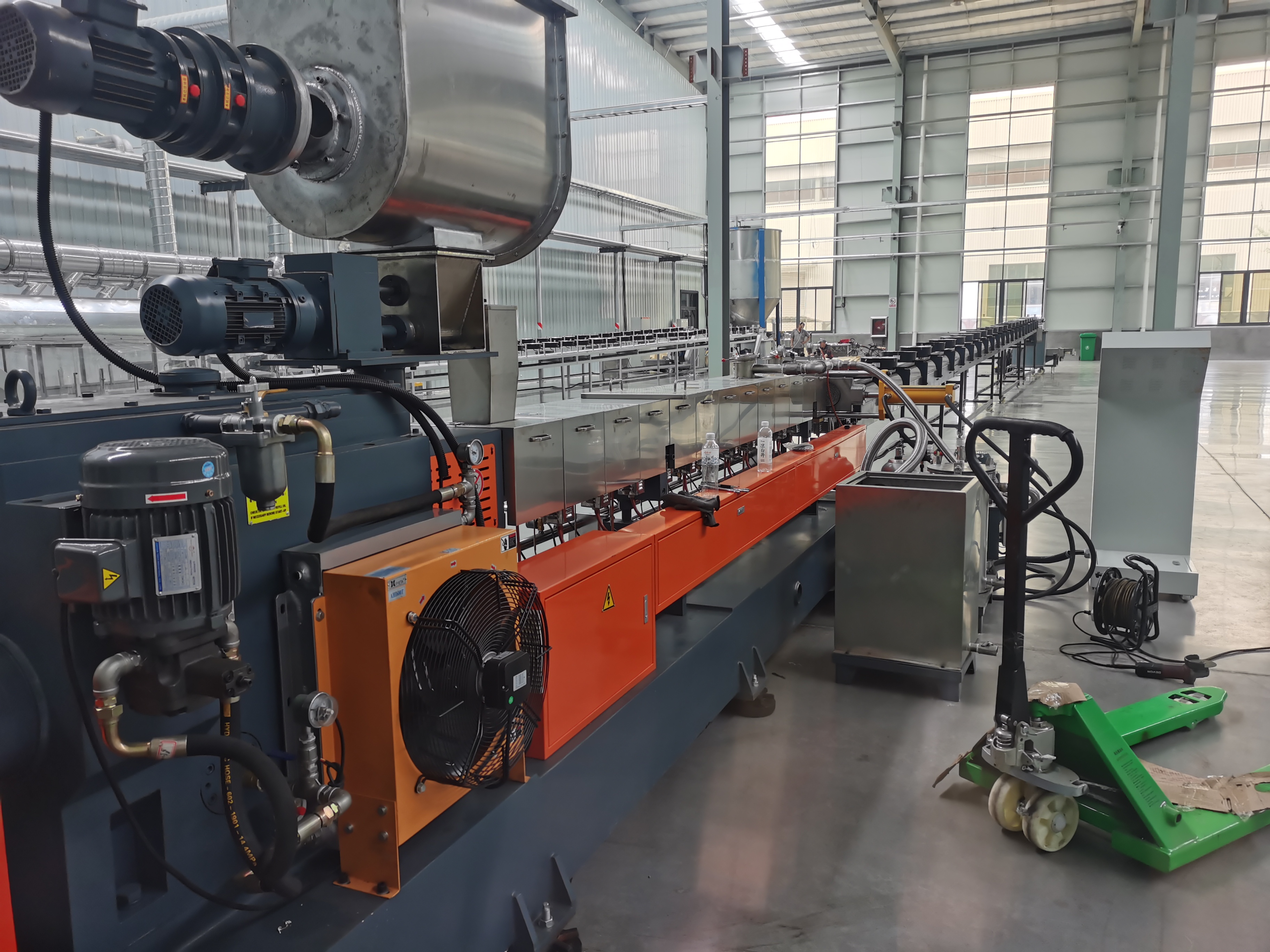
In many modern compounding plants, EVA has moved from a specialty resin to a high-volume material used in footwear, foamed sheets, hot-melt adhesives, films, and a variety of molded products. EVA’s flexibility, low-temperature toughness, and softness make it attractive, but the same characteristics also create challenges in pelletizing and handling.
An EVA underwater cutting pelletizing machine is designed specifically for these challenges. It allows processors to convert molten EVA into consistent, free-flowing pellets with tight process control, minimal dust, and high overall efficiency. Compared with traditional strand or water-ring systems, underwater pelletizing offers better control of pellet shape and size, especially for soft and tacky thermoplastic elastomers.
This guide explains how EVA behaves, how an EVA underwater pelletizing system works, and what criteria matter most when selecting equipment for a commercial production line. It is written in a neutral, third-person voice and focuses on technical and economic considerations rather than specific brands.
1. Understanding EVA and Why It Needs Special Pelletizing
EVA (ethylene-vinyl acetate) is a copolymer of ethylene and vinyl acetate. By adjusting the vinyl acetate content and melt index, EVA grades can range from relatively stiff, LDPE-like materials to very soft, rubbery elastomers.
Typical characteristics include:
● High flexibility and resilience
● Low-temperature toughness
● Good impact resistance
● Lower melting and heat-seal temperatures compared with many polyolefins
● Good clarity in film grades
● Resistance to stress cracking and many chemicals
These properties explain why EVA is widely used in:
● Shoe soles and midsoles
● Foamed sheets and sports mats
● Hot-melt adhesives and sealants
● Solar cell encapsulation films
● Flexible tubing, lenses, and various molded parts
However, higher vinyl acetate content and lower melting points mean that EVA can be sticky, soft, and prone to deformation while still warm. In conventional strand pelletizing, soft strands may deform, snake, or break; in water-ring systems, cut pellets can smear or stick together. Underwater pelletizing addresses these issues by cutting and quenching pellets in a tightly controlled water environment immediately at the die face.
2. What Is an EVA Underwater Cutting Pelletizing Machine?
An EVA underwater cutting pelletizing machine is a pelletizing line in which molten EVA from an extruder passes through a heated die plate into a water-filled cutting chamber. Rotating knives cut the melt into pellets directly at the die face while the pellets are surrounded by process water.
A typical system includes:
1 Extruder or melt pump – Delivers a stable, pressurized EVA melt.
2 Screen changer or filtration unit – Removes gels and contaminants, protecting the die plate and improving product quality.
3 Die plate and pelletizing head – The heart of the system, where melt passes through multiple holes. The die plate design strongly influences pellet size, shape, and throughput.
4 Underwater cutting chamber with rotating knives – Blades contact or closely follow the die surface, cutting the polymer as it emerges.
5 Process water loop – Circulates temperature-controlled water to quench pellets and transport them.
6 Water–pellet separation and drying system – Often a centrifugal dryer, which removes water and delivers dry, free-flowing pellets.
For EVA applications, the design is optimized to:
● Maintain uniform melt temperature to avoid premature crosslinking or degradation
● Control water temperature precisely to avoid sticking or pellet deformation
● Provide a knife and die surface combination that minimizes fines and tails
3. Key Benefits of Underwater Cutting for EVA
When properly specified and operated, an EVA underwater cutting pelletizing machine offers several advantages that directly support commercial performance.
3.1 Consistent, Spherical Pellets
Underwater pelletizing typically produces short, nearly spherical pellets with a narrow size distribution. This shape flows easily in downstream handling and dosing equipment and tends to pack uniformly in bags, octabins, and silos.
For EVA, the fast quenching in water helps pellets retain their shape instead of flattening or sticking. This is particularly important for foaming, compounding, and injection molding operations that rely on predictable bulk density and feed behavior.
3.2 High Degree of Automation
Modern underwater systems are highly automated, with integrated control of:
● Melt pressure and temperature
● Knife speed and blade pressure
● Water temperature, flow, and level
● Dryer speed and product discharge
Automation allows stable long-run operation with less operator intervention, which is valuable in plants running multiple EVA grades and continuous shifts. It also provides traceability and consistent execution of standard operating procedures, which supports quality management and compliance.
3.3 Flexible Polymer Range
Although the focus here is EVA, underwater cutting systems can usually process a wide range of thermoplastic elastomers such as TPE, TPU, TPV, SBS, POE, and similar materials, making the investment more flexible for plants running multiple elastomeric or soft polymer grades. A properly specified line can evolve with the product portfolio, instead of being locked into a single resin type.
4. Core Components and Their Impact on EVA Performance
Careful assessment of core components is essential when choosing an EVA underwater cutting pelletizing machine. Each section below shows how equipment design and engineering choices influence product quality and operating cost.
4.1 Extruder and Melt Pump
The extruder must deliver a stable, homogeneous EVA melt at the required throughput and pressure. Twin-screw extruders are often used when compounding additives, fillers, or color masterbatches, while single-screw extruders may suffice for simple melting and filtering operations.
A melt pump is frequently added to decouple melt generation from pelletizing. By stabilizing flow and pressure, the pump improves pellet consistency, reduces surging, and protects the die plate from pressure spikes. This combination is particularly helpful for EVA formulations with variable viscosities or high filler loadings.
4.2 Filtration and Screen Changer
EVA products used in films, footwear, and adhesives often require low gel content and tight visual appearance. A suitable screen changer or continuous filtration system helps maintain product quality while protecting the die plate from plugging and wear.
Key considerations include filtration fineness, filter area, pressure drop, and the ability to change screens without interrupting production. For high-value EVA grades, continuous or backflush-type systems can reduce waste and stabilize operation.
4.3 Die Plate and Cutter Hub
Die plate design (hole pattern, diameter, land length, and heating concept) has a major influence on:
● Maximum throughput
● Pellet size and shape
● Die pressure and energy demand
● Tendency to hang up or clog
For EVA, die plates are typically designed to maintain stable temperature and minimize dead zones where material could degrade. The cutter hub and blades must match the die plate pattern to achieve a clean cut without smearing.
Selection criteria include:
● Hole diameter and number of holes
● Expected pellet size range
● Material and surface treatment of the die plate
● Ease of cleaning and changeover between products
4.4 Water Loop and Thermal Management
The water loop must provide precise temperature control, adequate flow, and effective separation of pellets and fines.
If water is too hot, EVA pellets may fuse or deform; if it is too cold, thermal shock can create internal stresses or surface defects. The ideal temperature depends on formulation, throughput, and pellet size, but stability is always critical.
Important aspects are:
● Water tank design and level control
● Pump sizing and control strategy
● Heat exchanger capacity for heating and cooling
● Filtering devices to remove fines and contaminants
4.5 Drying and Downstream Handling
A well-designed centrifugal dryer removes surface water effectively without damaging soft EVA pellets. Internal geometry, rotational speed, and residence time must be matched to pellet size and fragility.
Downstream, smooth transfer to classifiers, conveyors, packaging lines, or silo systems is important to prevent impact damage and fines generation. Chutes and piping should avoid sharp bends and rough surfaces that could chip pellets or create static buildup.
5. Selection Criteria for an EVA Underwater Cutting Pelletizing Machine
When a processor evaluates an EVA underwater pelletizing investment, several clear criteria can be used to compare different solutions. These criteria also demonstrate a structured, experience-based approach aligned with E-E-A-T principles.
5.1 Target Applications and EVA Formulations
Selection starts with a precise definition of:
● EVA grades (vinyl acetate content, melt index, possible crosslinking agents)
● Additives and fillers (foaming agents, pigments, silica, calcium carbonate, oils, waxes)
● End-use applications (shoe soles, foamed sheets, hot-melt adhesives, films, cable compounds, and so on)
High-VA, low-melting EVA with foaming agents may demand tighter thermal control and specialized die plate designs compared with higher-melting, lower-VA grades. The selected machine should be proven on comparable formulations wherever possible.
5.2 Throughput Range and Scalability
A realistic throughput range—minimum, typical, and maximum—is essential for sizing:
● Extruder screw diameter and length-to-diameter ratio
● Die plate and cutter configuration
● Water system and dryer capacity
Some systems are designed with modularity in mind, allowing later upgrades with larger die plates, extended filtration area, or additional dryers. Selecting a system with at least one step of scalability headroom can reduce long-term cost when demand increases, instead of forcing a complete line replacement.
5.3 Pellet Size, Shape, and Bulk Density
Different EVA applications may prefer different pellet geometries. For example:
● Foamable EVA compounds may benefit from smaller, uniform pellets with predictable bulk density, aiding dosing and mixing.
● Adhesive-grade EVA may emphasize dust-free pellets for consistent feeding and minimal contamination.
The buyer should specify desired pellet size range, acceptable fines percentage, bulk density range, and allowed variability. Clear quantitative requirements help the equipment supplier configure the die plate, knives, and water system accordingly.
5.4 Temperature Control and Process Stability
Because EVA is sensitive to temperature, the selection process should evaluate:
● Melt temperature control capability in the extruder and melt pump
● Die plate heating and insulation design, including zones and feedback
● Water temperature control range, accuracy, and response time
● Ability to minimize residence time and dead zones throughout the system
Systems that integrate these elements with robust sensors and control loops typically deliver more stable pellet quality and fewer off-spec lots. Process stability also simplifies grade changes and reduces operator stress.
5.5 Automation, Controls, and Data Integration
When comparing systems, processors increasingly look at the control philosophy. Important factors include:
● Recipe management, allowing different EVA grades to run under stored sets of parameters
● Alarm handling, safety interlocks, and diagnostic messages
● Data logging of pressures, temperatures, speeds, and alarms
● Connectivity to plant-level systems for production reporting and traceability
A strong automation platform reduces human error, shortens the learning curve, and provides documented evidence of process capability.
5.6 Energy Efficiency and Water Management
Underwater pelletizing uses pumping power for water circulation and energy for drying. Modern systems focus on:
● Insulated piping and equipment to reduce heat loss
● Optimized pump selection and variable-speed drives
● Efficient dryers with minimized air or power consumption
● Closed-loop water filtration and cooling to reduce fresh water usage
Evaluating the specific energy consumption per kilogram of pellets helps compare machines with different designs and is particularly important for large-scale, continuous operations.
5.7 Safety, Maintenance, and Cleanability
An EVA underwater cutting pelletizing machine should provide:
● Safe access for cleaning knives, die plates, and filters
● Clear lockout-tagout provisions and guarding around rotating parts
● Easy inspection of seals, bearings, and pumps
● Good visibility of the cutting chamber, either through windows or inspection ports
Soft EVA can build up in dead spots; designs that minimize accumulation and simplify cleaning reduce downtime. The processor should also review recommended maintenance intervals, spare-part lists, and available training packages.
5.8 Total Cost of Ownership and Support
Beyond purchase price, processors should consider:
● Expected service life of die plates and knives
● Availability, lead time, and cost of spare parts
● Local or remote service and typical response time
● Training support for operators and maintenance staff
● Warranty conditions and any performance guarantees
Calculating total cost of ownership over five to ten years gives a more realistic view of cost compared with focusing only on initial capital expenditure.
6. Implementation Best Practices
Once equipment has been selected, a disciplined implementation approach supports rapid, stable start-up and safer operation.
6.1 Process Design and Trials
Pilot trials—either at a test center or on a pilot line—can help:
● Confirm pellet shape and size for the chosen EVA grades
● Determine optimum water temperature and flow
● Establish start-up and shutdown procedures
● Map out safe operating windows for temperature, pressure, and knife speed
Documenting these conditions in advance establishes a technical baseline and shortens the commissioning phase.
6.2 Integration with Upstream and Downstream Equipment
The underwater pelletizer rarely operates alone. It must integrate with:
● Compounding or melting extruder
● Feeding and dosing systems for EVA and additives
● Packaging, conveying, or silo storage systems
Mechanical layout, control signals, safety circuits, and emergency procedures should be reviewed as a whole to avoid bottlenecks and conflicts. For example, upstream interlocks should prevent extrusion into a stopped pelletizer, and downstream systems should be capable of handling the maximum pelletizing rate.
6.3 Standard Operating Procedures and Training
Clear standard operating procedures covering start-up, grade changes, jam clearing, emergency shutdown, and routine maintenance help operators run the line consistently.
Training should balance:
● Process theory (why parameters matter)
● Practical tasks such as knife changes, screen changes, and cleaning
● Safety procedures around hot surfaces, high-pressure systems, and moving equipment
Well-trained staff reduce downtime, improve safety, and protect the investment over its lifetime.
7. Common Mistakes to Avoid
Processors considering an EVA underwater cutting pelletizing machine can avoid several frequent pitfalls:
7 Underestimating EVA’s softness and stickiness – Selecting a system optimized mainly for rigid polymers without EVA-specific experience may result in pellet tails, sticking, and clumping.
8 Ignoring water quality and filtration – Poor water quality can lead to deposit formation, reduced cooling efficiency, corrosion, and unstable pellet appearance.
9 Oversimplifying automation needs – A basic control system may look cheaper initially but can limit consistency, diagnostics, and traceability, especially when running multiple EVA grades.
10 Insufficient allowance for grade changes – EVA lines often run multiple formulations; die plates, knives, and control recipes should support rapid, repeatable changeovers.
11 Under-resourced maintenance – Blades, seals, bearings, and filters require planned maintenance; neglect leads to rapidly deteriorating pellet quality, unplanned downtime, and higher long-term costs.
8. Future Trends in EVA Underwater Pelletizing
Several emerging trends are shaping the design and operation of underwater pelletizing systems for EVA and other elastomers:
● Digitalization and remote diagnostics – Enhanced sensor packages, smarter controls, and connectivity enable predictive maintenance, remote troubleshooting, and continuous process optimization.
● More efficient water and energy management – New dryer designs, optimized flow paths, and improved insulation reduce environmental footprint and operating cost, supporting sustainability goals.
● Broader polymer compatibility – Systems are being designed to handle bio-based polymers and recyclable blends alongside EVA and thermoplastic elastomers, positioning processors for changing market demands.
Selecting a system with software upgradability and a flexible hardware platform helps future-proof the investment.
9. Conclusion: Turning EVA into High-Value Pellets
EVA is a versatile polymer with attractive mechanical and processing properties, but its softness and low melting point demand careful pelletizing. An EVA underwater cutting pelletizing machine offers a robust solution—delivering uniform pellets, high automation, and compatibility with a wide range of EVA formulations and related elastomers.
By focusing on clearly defined selection criteria—target formulations and throughput, pellet specifications, temperature control, automation level, energy and water efficiency, safety, maintainability, and total cost of ownership—processors can choose equipment that supports stable production, high-quality pellets, and long-term profitability.
FAQ: EVA Underwater Cutting Pelletizing Machine
Q1: What is EVA and why is underwater pelletizing recommended for it?
EVA (ethylene-vinyl acetate) is a flexible, low-temperature-tough thermoplastic copolymer used in products such as footwear, foams, adhesives, and films. Its softness and relatively low melting point make it prone to deformation and sticking during pelletizing. Underwater pelletizing cuts and quenches pellets directly at the die face in a controlled water environment, helping pellets retain their shape and preventing sticking or smearing.
Q2: How does underwater cutting differ from strand or water-ring pelletizing for EVA?
In strand pelletizing, molten polymer is extruded as strands, cooled in a water bath, and then cut. Soft EVA strands can break or deform before cutting. In water-ring systems, pellets are cut at the die face but cooled only in a thin water film, which may not be sufficient for soft, tacky materials. Underwater cutting combines die-face cutting with full immersion in water, enabling rapid quenching and more consistent pellet geometry, particularly valuable for EVA and other elastomers.
Q3: What throughput range can an EVA underwater pelletizing line handle?
Throughput depends on extruder size, die plate design, and water or dryer capacity. Commercial EVA lines can range from small pilot systems producing tens of kilograms per hour to large production lines reaching several tons per hour. The practical range is determined by melt viscosity, formulation, and pellet size targets, so throughput should be confirmed through engineering design calculations and, ideally, pilot trials.
Q4: Can the same machine process other polymers besides EVA?
Yes. Most underwater pelletizing systems designed for EVA can also process a variety of thermoplastic elastomers and standard polymers, such as TPU, TPE, TPV, SBS, POE, and selected polyolefins, provided that screw design, die plate configuration, and operating conditions are suitable. Many processors select an EVA-capable underwater system precisely because it offers this flexibility for multi-product lines.
Q5: What maintenance is typically required on an EVA underwater cutting pelletizing machine?
Key maintenance items include regular inspection and replacement of cutter blades, monitoring knife pressure and alignment, cleaning and inspection of die plates, checking seals and bearings on the pelletizer and water pumps, maintaining screen changers and filtration units, and cleaning or servicing the dryer and water tank. A structured preventive maintenance plan helps stabilize pellet quality and extend the service life of critical components.
Q6: How can a processor estimate the payback period for such an investment?
Payback estimation usually combines several factors:
● Capital cost of the underwater pelletizing system
● Savings from reduced scrap and off-spec material
● Productivity gains from higher throughput and automation
● Labor savings from simplified and standardized operation
● Lower maintenance costs compared with outdated systems
● Potential energy and water savings from modern, efficient equipment
By modeling these factors against current operating costs and forecast production volumes, decision-makers can estimate a realistic payback time and compare it with other possible investments in the plant.
mai:zhuo.li@zextrusion.com
factory address: No.135 Shiba Road, Taowu Industrial Park, Jiangning District, Nanjing
office address: Room 1408, Block C4, Vanke Duhui World, No. 31, Lvdu Avenue, Jiangning District, Nanjing