
Twin-Screw Extruders for Masterbatch & Engineering Plastics: A Practical Buyer’s Guide
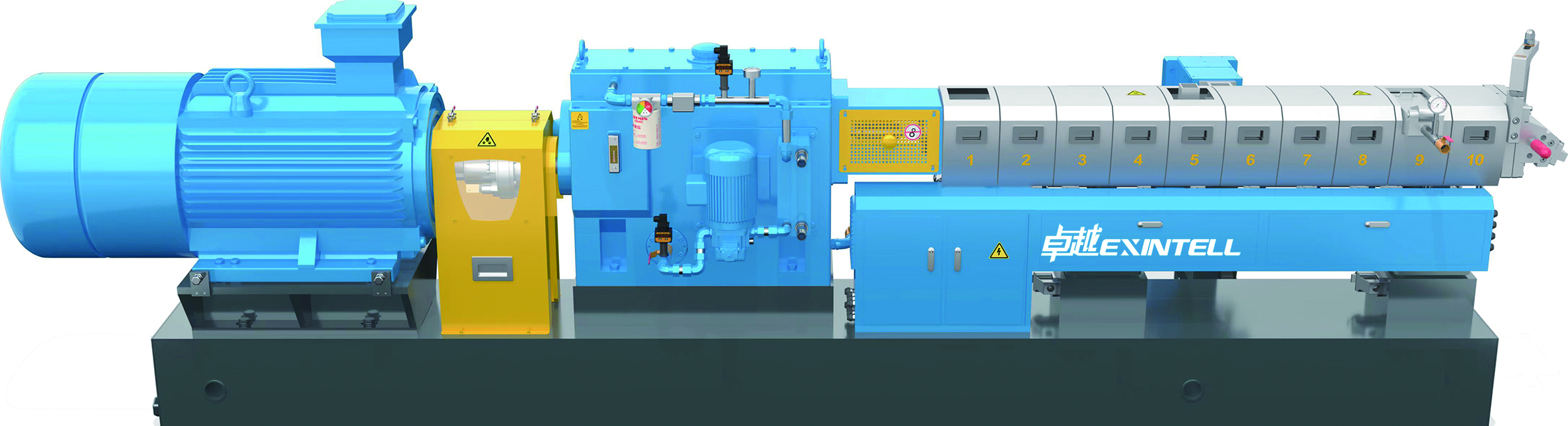
In modern plastics processing, twin-screw extruders for masterbatch & engineering plastics have become the core equipment for achieving consistent quality, high productivity, and advanced performance properties. As color and additive requirements become more demanding and engineering polymers more complex, processors increasingly rely on co-rotating twin-screw compounding lines instead of simple single-screw systems.
This article provides a commercial, decision-focused overview aimed at technical, purchasing, and operations stakeholders who need to evaluate, select, and justify investment in twin-screw extruders for masterbatch and engineering plastics production. It covers key process requirements, machine configurations, selection criteria, and risk-control considerations, while avoiding brand comparisons and focusing instead on categories of solutions and objective technical parameters.
1. Why Twin-Screw Extruders Matter for Masterbatch & Engineering Plastics
In masterbatch and engineering plastics production, the extruder is not just a melting device; it is a continuous reactive mixer, responsible for:
● Intensive dispersive & distributive mixing of pigments, fillers, and additives
● Precise temperature and shear control to protect polymer properties
● Stable throughput with minimal variation in pellet quality
● Efficient degassing of volatiles and moisture
Compared with typical single-screw extruders, twin-screw extruders for masterbatch & engineering plastics offer:
● Independent control of feeding, melting, mixing, venting, and pressure-building zones
● Modular screws tailored to each formulation and process step
● Better handling of high filler loading, heat-sensitive additives, and shear-sensitive polymers
● Flexibility to produce color masterbatch, additive masterbatch, filler masterbatch, and engineering compounds on the same platform (with screw and process changes)
For companies looking to upgrade from basic compounding capability to high-value, consistent production, a well-chosen twin-screw extruder is often a strategic investment rather than just a capacity increase.
2. Core Applications: From Color Masterbatch to High-Performance Compounds
2.1 Color Masterbatch
Color masterbatch requires:
● Uniform pigment dispersion to avoid specks and color streaks
● Tight L*a*b* color tolerances
● Stable melt filtration for cleanliness
Twin-screw extruders enable highly efficient mixing by combining kneading blocks, reverse elements, and mixing sections. This allows pigment aggregates to be broken down while distributing them uniformly throughout the polymer carrier.
2.2 Additive & Filler Masterbatch
Additive and filler concentrates often contain:
● Heat-sensitive additives (UV stabilizers, antioxidants, antistatic agents)
● High mineral loadings (talc, calcium carbonate, glass, flame retardants)
Twin-screw extruders can be configured with:
● Side feeders for accurate filler dosing
● Venting ports and vacuum degassing to remove moisture from inorganic fillers
● Optimized screw elements to minimize degradation while achieving full dispersion
2.3 Engineering Plastics Compounding
Engineering plastics and high-performance polymers come with their own challenges:
● Higher melt temperatures (PA, PBT, PC, PEEK-like materials, etc.)
● Narrow processing windows and stricter viscosity control
● Reinforcements (glass fiber, mineral, impact modifiers)
For these applications, twin-screw extruders for masterbatch & engineering plastics must provide:
● High torque density and L/D (length/diameter) ratios
● Robust barrel metallurgy for abrasion and corrosion resistance
● Advanced control strategies for temperature, pressure, and screw speed
3. Key Design Features of Twin-Screw Extruders for Masterbatch & Engineering Plastics
When evaluating extruders, decision-makers typically look at a combination of mechanical design, process performance, and lifecycle cost. The following features strongly influence both product quality and operating economics.
3.1 Screw Configuration and L/D Ratio
● Co-rotating, intermeshing twin screws are most common in compounding lines for masterbatch and engineering plastics.
● L/D ratio (e.g., 32–60) determines how much process length is available for melting, mixing, devolatilization, and pressure-building.
● Modular screws allow configurations such as:
○ Conveying elements for feeding and transport
○ Kneading blocks for dispersive mixing
○ Mixing and reversing elements for distributive mixing and pressure control
A flexible machine allows processors to optimize screw design for each product family instead of accepting a “one size fits all” configuration.
3.2 Torque Density and Drive System
Torque density defines how much mechanical energy can be applied to the polymer per unit screw diameter. High torque density:
● Enables higher throughput at a given screw speed
● Supports high-viscosity melts and high filler formulations
● Expands the processing window for engineering resins
Robust gearboxes, reliable couplings, and efficient motors are all crucial. Buyers should evaluate load ratings, safety factors, and the supplier’s track record with heavy-duty compounding applications.
3.3 Feeding and Dosing Systems
Stable feeding is essential, especially for multi-component formulations:
● Main feeder: provides consistent feed of base polymer (granules, powder, or recyclate).
● Side feeders: add fillers, additives, or color concentrates downstream to reduce shear exposure.
● Loss-in-weight gravimetric feeders are often preferred for tighter ratio control and traceability.
The integration of feeders with the extruder control system is a key quality and efficiency factor.
3.4 Barrel Design, Venting, and Degassing
Barrel sections must allow:
● Zoned temperature control
● Open ports for side feeding of fillers and additives
● Venting and vacuum ports for moisture and volatiles
Engineering plastics and flame-retardant compounds often release volatiles during processing. A well-designed degassing system prevents porosity in pellets and protects downstream equipment.
3.5 Pelletizing and Downstream Equipment
Twin-screw extruders for masterbatch & engineering plastics are typically integrated with:
● Strand pelletizers
● Underwater pelletizers
● Water ring or face-cut systems, depending on polymer rheology and throughput
The choice of pelletizing system affects:
● Pellet shape and uniformity
● Cooling efficiency and drying requirements
● Level of automation and maintenance
4. Selection Criteria: How Processors Can Choose the Right Twin-Screw Extruder
To demonstrate expertise and enable objective decision-making, it is essential to define clear, measurable selection criteria. A professional evaluation typically considers at least the following dimensions.
4.1 Application & Product Scope
Processors should define:
● Types of masterbatch (color, additive, filler, combination)
● Target engineering polymers (e.g., PA, PC, PBT, blends, etc.)
● Required filler loadings and reinforcement types
● Target throughput range (kg/h) and potential future expansion
An extruder suitable for medium-load color masterbatch may not be ideal for highly filled flame-retardant compounds or high-temperature specialty polymers.
4.2 Performance and Quality Requirements
High-performing production lines require:
● Stable throughput with low torque and pressure fluctuations
● Tight control of melt temperature
● Consistent pigment dispersion, mechanical properties, and MFI/viscosity
● Minimal off-spec material and scrap rates
Real performance is not only about maximum throughput; it is about the balance between capacity, quality, and energy consumption.
4.3 Process Flexibility and Changeover Efficiency
Most compounding plants manage:
● Multiple colors
● Various additive packages
● Several base polymer families
This makes flexibility and changeover time crucial:
● How easily can screw elements and barrel sections be reconfigured?
● Is cleaning straightforward and safe, especially for dark/white color switches?
● Can recipes be changed quickly in the control system with clear version management?
A more flexible line may justify a higher initial investment by enabling faster time-to-market and more product variants.
4.4 Energy Efficiency and Total Cost of Ownership (TCO)
Beyond the purchase price, companies evaluate:
● Specific energy consumption (kWh per kg)
● Cooling water and compressed air demand
● Maintenance cycles and spare parts costs
● Downtime associated with component wear
Twin-screw extruders for masterbatch & engineering plastics run for many years; therefore, TCO often outweighs initial capital expenditure.
4.5 Automation, Control, and Data Integration
Modern compounding lines are expected to be:
● Fully instrumented for temperatures, pressures, torque, and dosing rates
● Integrated with SCADA, MES, or ERP systems for data logging
● Capable of automatic start-up sequences, safety interlocks, and alarm handling
● Supportive of process analytics and continuous improvement programs
Such features contribute to traceability, regulatory compliance, and quality audits, especially in sensitive sectors like automotive, electrical, and consumer goods.
4.6 Safety, Compliance, and Environmental Considerations
A professional selection process also reviews:
● Compliance with relevant machinery and electrical standards
● Guarding, emergency stops, and lockout/tagout design
● Dust and fume extraction provisions
● Noise and vibration levels
● Compatibility with recycling and sustainability strategies
5. How Different Categories of Twin-Screw Solutions Serve Masterbatch & Engineering Plastics
Without naming specific brands, twin-screw extruders for masterbatch & engineering plastics can be broadly categorized to help decision-makers position their needs.
5.1 Compact Laboratory and Pilot Extruders
Purpose:
● R&D, color matching, formulation development
● Small-batch specialty or custom products
Characteristics:
● Smaller screw diameters (e.g., 16–35 mm)
● Lower throughput (a few kg/h to tens of kg/h)
● High flexibility and frequent changeover
These are ideal for application development centers and for companies that need to test formulations before scaling up.
5.2 Medium-Scale Production Lines
Purpose:
● Standard color masterbatch
● General-purpose additive masterbatch
● Medium-volume engineering compounds
Characteristics:
● Screw diameters in the 40–75 mm range
● Throughput from hundreds to a few thousand kg/h
● Balanced focus on flexibility and cost-per-kg
This category suits many regional compounders and masterbatch producers serving a diversified customer base.
5.3 High-Throughput Industrial Extruders
Purpose:
● Large-volume filler masterbatch (e.g., high CaCO₃ loading)
● Commodity color and additive masterbatch for high-output film or fiber lines
● High-volume engineering plastics compounding
Characteristics:
● Larger screw diameters, high torque density
● Designed for continuous operation and maximum capacity
● Heavy-duty metallurgical solutions, robust drives
These solutions are targeted at high-volume manufacturing where small differences in energy consumption, uptime, and scrap have a large financial impact.
6. Practical Steps in the Procurement and Evaluation Process
When planning an investment, professional teams often follow a structured process:
1 Define the business case
○ Market demand forecasts
○ Required capacity and flexibility
○ Payback and ROI expectations
2 Prepare a specification document
○ Detailed material list (polymers, fillers, additives)
○ Product performance targets (mechanical, optical, rheological)
○ Process conditions and anticipated challenges
3 Assess potential solution categories
○ Laboratory vs. production vs. high-throughput lines
○ Required L/D, torque class, and drive power
○ Needed auxiliary systems (feeding, pelletizing, material handling)
4 Conduct technical and commercial comparisons
○ Process simulations or test runs with representative formulations
○ Evaluation of energy usage, line efficiency, and cleaning time
○ Review of lifecycle support, training, and spare parts strategies
5 Finalize layout and integration
○ Plant layout, material flow, and operator access
○ Electrical and utility interfaces
○ Integration with existing automation and safety systems
With clear selection criteria and a structured approach, companies can choose twin-screw extruders for masterbatch & engineering plastics that not only meet current needs but also support future product and market evolution.
7. Risk Management: Common Pitfalls and How to Avoid Them
Even experienced processors sometimes encounter unexpected issues when upgrading or installing new lines. Typical risks include:
● Underestimating formulation complexity and choosing insufficient torque or L/D
● Over-focusing on maximum throughput while neglecting quality stability
● Inadequate consideration of cleaning and color change procedures
● Overlooking operator training and process know-how transfer
● Insufficient spare parts planning, creating long downtimes
Mitigating these risks involves realistic testing, thorough technical discussions, and ensuring that internal teams understand not only how to operate the line, but also how to optimize recipes and screw configurations.
8. Building E-E-A-T: Demonstrating Expertise and Reliability in Extrusion Decisions
In the context of modern procurement and technical communication, Experience, Expertise, Authoritativeness, and Trustworthiness (E-E-A-T) are not only relevant for digital content but also for engineering decisions.
A trustworthy decision process for selecting twin-screw extruders for masterbatch & engineering plastics should be based on:
● Documented experience with similar formulations and applications
● Transparent test reports and process data
● Clearly defined selection criteria and acceptance tests
● Long-term service strategies, including preventive maintenance and periodic process audits
Companies that build a strong, documented knowledge base around their compounding processes are better able to stabilize quality, reduce cost, and respond quickly to new customer requirements.
9. Conclusion
Twin-screw extruders for masterbatch & engineering plastics play a strategic role in enabling advanced formulations, consistent quality, and efficient production. By focusing on clear, objective selection criteria—such as torque density, L/D ratio, feeding and degassing capabilities, automation level, and lifecycle cost—processors can select equipment that aligns with both technical and commercial objectives.
Rather than comparing individual brands, decision-makers benefit from understanding categories of solutions, how they address specific product families, and how they support long-term growth in masterbatch and engineering plastics markets.
FAQ: Twin-Screw Extruders for Masterbatch & Engineering Plastics
1. What is the main advantage of twin-screw extruders over single-screw extruders for masterbatch?
The main advantage is superior mixing and process control. Co-rotating twin-screw systems can be configured with specialized mixing and kneading elements, side feeders, and venting sections, which improve pigment and additive dispersion, reduce agglomerates, and provide more stable product quality compared with typical single-screw extruders.
2. Are the same twin-screw extruders suitable for both color masterbatch and engineering plastics?
A single platform can often handle both, provided it has sufficient torque, temperature capability, and modular screw design. However, the screw configuration, barrel setup, and auxiliary equipment may need to be adapted to each application, especially when dealing with high-temperature resins or high filler loadings.
3. How important is L/D ratio when choosing a twin-screw extruder?
L/D ratio determines how much process length is available for feeding, melting, mixing, degassing, and pressure-building. Higher L/D ratios generally offer more flexibility and finer control, but must be matched to the desired throughput, product types, and available footprint.
4. What role do feeding systems play in masterbatch and engineering plastics compounding?
Feeding systems are critical for accurate dosing of base polymers, pigments, fillers, and additives. High-quality gravimetric feeders and well-designed side feeding points minimize fluctuations in composition and help achieve consistent mechanical and optical properties.
5. How can a processor reduce downtime during color or formulation changes?
Downtime can be reduced by selecting extruders with easy-access barrels, optimized screw designs for cleaning, and well-defined changeover procedures. Using standardized screw segments, quick-clean die heads, and documented cleaning recipes also helps minimize time between production campaigns.
6. Is high torque always better for twin-screw extruders?
Higher torque capacity offers a broader processing window and higher potential throughput, but it is not the only factor. The balance between torque, screw speed, energy efficiency, and formulation requirements is more important than simply maximizing torque.
7. What data should be monitored during operation to ensure stable quality?
Key parameters include screw speed, torque, melt pressure, melt temperature, feeder rates, and vacuum level at venting ports. Continuous monitoring and logging of these variables support troubleshooting, process optimization, and compliance with quality management systems.
8. How does a processor evaluate total cost of ownership (TCO) for a twin-screw line?
TCO includes not only the purchase price, but also energy usage, maintenance costs, spare parts, expected lifetime, downtime risk, and product scrap rates. A realistic evaluation compares these factors over the expected operating life of the line, rather than focusing solely on initial investment.
mai:zhuo.li@zextrusion.com
factory address: No.135 Shiba Road, Taowu Industrial Park, Jiangning District, Nanjing
office address: Room 1408, Block C4, Vanke Duhui World, No. 31, Lvdu Avenue, Jiangning District, Nanjing