
Industrial Plastic Mixer: How to Choose the Right System for Modern Plastic Processing
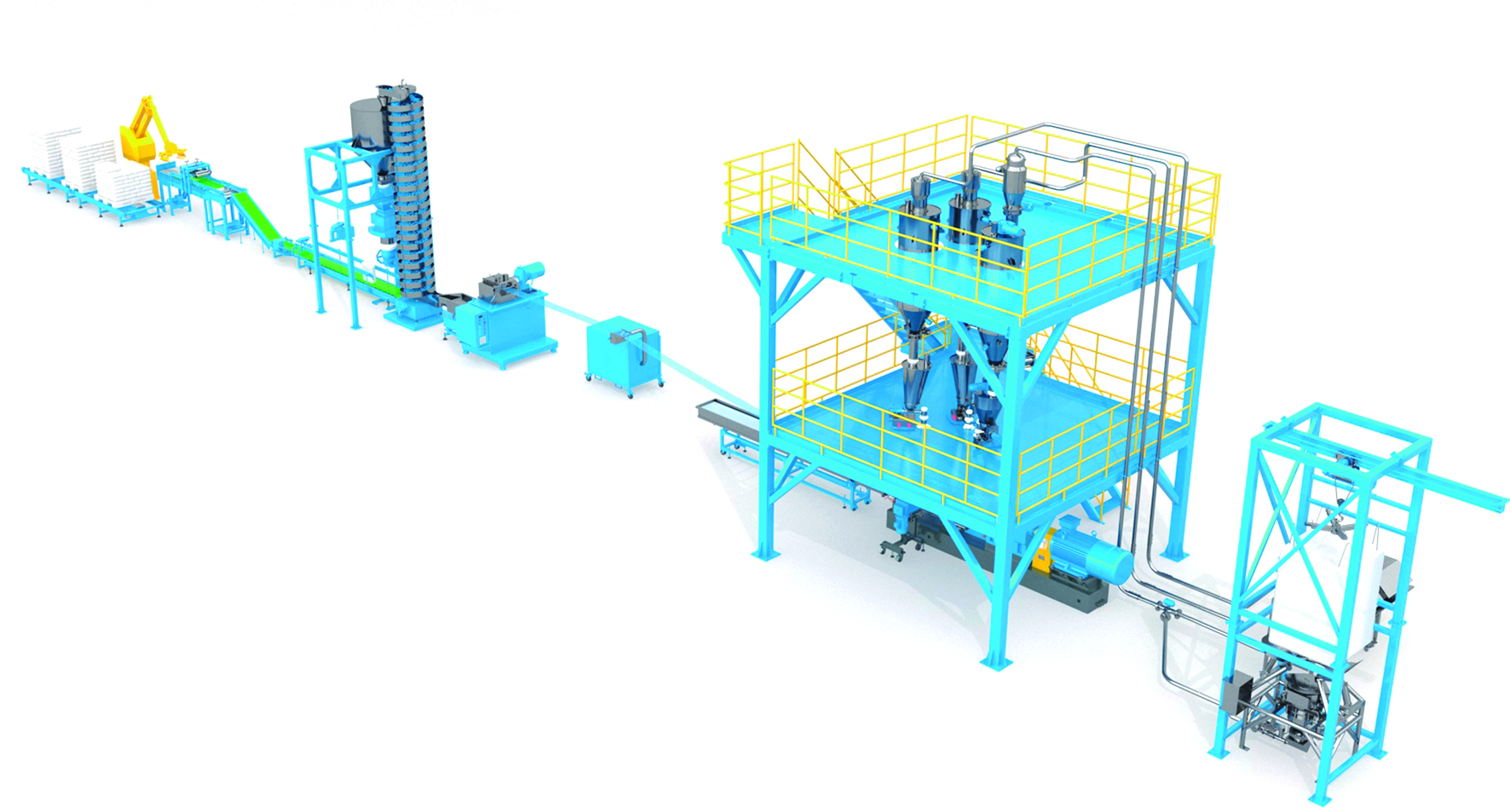
Industrial plastic processing has become more demanding than ever. Requirements for consistent color, tight tolerances, and traceable quality data mean that manual or improvised mixing solutions no longer suffice. At the center of many high-performing plastic plants stands a critical piece of equipment: the Industrial Plastic Mixer.
When correctly specified and integrated, an industrial plastic mixer reduces scrap, stabilizes product quality, shortens changeover time, and supports regulatory compliance. When poorly chosen, it becomes a bottleneck that produces dust, segregation, color streaking, and unpredictable performance.
This guide takes a practical, criteria-based approach to selecting an industrial plastic mixer, focusing on experience, expertise, and measurable decision factors rather than brand names. It is designed for plastic processors, compounders, recyclers, and OEMs who need a clear framework for evaluating mixer options in a commercial context.
1. The Role of an Industrial Plastic Mixer in Plastic Processing
An Industrial Plastic Mixer is engineered to blend plastic materials and additives so that every batch or continuous stream reaches a high level of uniformity before it enters the next process step. Typical applications include:
● Pre-mixing virgin resin with color masterbatch
● Blending regrind or recycled flakes with virgin material
● Homogenizing additives such as stabilizers, UV absorbers, antistatic agents, or fillers
● Conditioning materials by pre-heating, cooling, or drying during mixing
● Equalizing bulk density to ensure stable feeding into extruders or injection molding machines
In modern plastic plants, the mixer is often located:
● Upstream of extrusion, to ensure a homogeneous feed
● Between dosing/feeding systems and processing machines
● In central material preparation rooms that serve multiple lines
A well-selected industrial plastic mixer delivers:
● Consistent product quality: Color and properties remain stable from shot to shot or from reel to reel.
● Predictable processing: Stable melt pressure, temperature, and throughput at extruders or molding machines.
● Reduced material waste: Less off-spec material during start-up, changeover, or recipe adjustments.
● Improved production efficiency: Shorter blending times and lower labor requirements compared with manual methods.
2. Core Types of Industrial Plastic Mixer Systems
Different plastic applications demand different mixing mechanisms. Instead of focusing on brands, it is more practical to compare categories of mixer designs.
2.1 Batch Mixers
Batch mixers process a defined quantity of material at a time. They are common in compounding, masterbatch preparation, and color-critical production. Typical designs include:
● Vertical or conical mixers: A vertical vessel with mixing elements that lift and fold material. Suitable for pellets, granules, and free-flowing powders.
● Tumbler or drum mixers: Rotating drums that gently tumble the material, often used for delicate or fragile pellets.
● Ploughshare or paddle mixers: Aggressive mixing elements that generate a three-dimensional mixing pattern, ideal for complex formulations with powders and granules.
Batch mixers excel when recipes change frequently, when tight traceability is required, or when quality checks must be performed on each batch before release.
2.2 Continuous Mixers
Continuous mixers process material in a constant flow. They are suited to large-scale, stable production where the same product runs for long periods.
● Twin-shaft continuous mixers: Two intermeshing shafts with paddles or blades that mix material while it moves through the chamber.
● In-line static mixers: Stationary mixing elements installed in a pipeline to create turbulence and mixing as material flows through.
Continuous mixers provide:
● Steady material throughput
● Compact footprint for high-output operations
● Simplified integration with automated dosing and conveying
2.3 High-Shear vs. Low-Intensity Mixing
Industrial plastic mixers can also be categorized by mixing intensity:
● High-shear mixers: Use fast-moving blades or rotors to impart intense mechanical energy. They are suitable for dispersing pigments, breaking down agglomerates, or coating particles with additives.
● Low-intensity mixers: Focus on gentle tumbling or folding, preserving pellet shape and minimizing dust. They are preferable for shear-sensitive materials and fragile compounds.
Choosing between high-shear and low-intensity depends on the formulation, the sensitivity of the polymer, and the desired degree of dispersion.
2.4 Gravimetric and Volumetric Dosing Integration
Many industrial plastic mixers are combined with dosing systems:
● Gravimetric dosing: Measures the mass of each component, offering high accuracy and traceability.
● Volumetric dosing: Uses volumetric flow (e.g., screw revolutions), suitable where high precision is less critical.
When integrated with an industrial plastic mixer, these systems turn raw materials into pre-verified blends, reducing operator error and improving repeatability.
3. Key Selection Criteria for an Industrial Plastic Mixer
To demonstrate consistent, professional decision-making, it is useful to apply transparent, practical criteria. The following factors help define whether a specific industrial plastic mixer category is suitable for a given plant.
3.1 Application and Material Characteristics
The starting point is always the material. Key questions include:
● What types of polymers are processed (e.g., PP, PE, ABS, PET, engineering plastics)?
● Are materials supplied as pellets, flakes, powders, or a mix of forms?
● Does the formulation include high levels of fillers, pigments, or fiberglass?
● Are any components temperature- or shear-sensitive?
For example, powder-heavy formulations or recycled flakes often benefit from mixers with more aggressive paddles, while standard pellet blending may be optimally handled by vertical or tumbler-style mixers.
3.2 Capacity, Throughput, and Residence Time
Capacity must match both current and projected production needs:
● Batch volume: Determined by the mass of material per batch and bulk density.
● Cycles per hour: How many batches are needed to support downstream equipment.
● Continuous throughput: For continuous lines, the mixer must handle peak production rates without compromising mixing.
Plants that underestimate capacity often face bottlenecks, extended mixing times, or frequent changeovers, all of which reduce overall equipment effectiveness.
3.3 Mixing Quality and Homogeneity
A professional evaluation examines mixing performance with measurable metrics:
● Coefficient of variation (CV) for key components such as pigments or additives
● Visual color uniformity across parts or extrudate
● Stability of mechanical or optical properties in quality tests
Before selection, many processors perform trial mixes under realistic conditions to confirm that the industrial plastic mixer can meet specified uniformity targets.
3.4 Mechanical Design and Build Quality
To perform reliably under demanding industrial conditions, an industrial plastic mixer should offer:
● Robust construction with suitable materials (e.g., stainless or coated steel for abrasive or corrosive materials)
● Precision machining of mixing elements and shafts
● Well-engineered seals and bearings to minimize leakage and dust
● Vibration control and balanced rotating parts
Durable design reduces unplanned downtime, lowers the risk of contamination, and extends service life.
3.5 Automation, Control, and Data Integration
Modern plastic plants increasingly rely on real-time data and automated control. Relevant features include:
● PLC-based control with recipe management
● Integration with plant MES or ERP systems
● Data logging for batch parameters, alarms, and maintenance events
● Remote diagnostics for service support
An automated industrial plastic mixer contributes directly to traceability and consistent quality, supporting audits and customer requirements.
3.6 Energy Efficiency and Operating Costs
The purchasing price is only one part of the total cost. Professional selection includes:
● Power consumption (kWh per kilogram processed)
● Heat generation and the need for cooling or ventilation
● Compressed air usage for actuators or cleaning systems
● Time needed per batch or for cleaning and changeover
An energy-efficient mixer not only lowers operating costs but also supports sustainability targets.
3.7 Safety and Compliance
Compliance with safety standards and good engineering practice is essential:
● Mechanical guarding and interlocks on access doors
● Emergency stop devices within easy reach
● Dust management to minimize explosion and health risks
● Compliance with relevant safety and electrical standards in the region of operation
Well-designed safety features protect personnel and help avoid costly incidents.
3.8 Cleaning, Maintenance, and Hygiene
For plants that run multiple colors or formulations, cleaning can dominate downtime. Important aspects include:
● Accessibility of internal surfaces
● Quick-release or swing-out mixing elements
● Smooth, easy-to-clean surfaces with minimal dead zones
● Clear maintenance intervals and simple procedures
Time saved during cleaning and maintenance directly increases available production hours.
3.9 Scalability and Future Flexibility
A chosen industrial plastic mixer should support growth and product changes:
● Modular designs that can be upgraded with additional sensors or automation
● Ability to handle a wider range of bulk densities or material types
● Future integration with new upstream or downstream equipment
Selecting a flexible system reduces the risk of early obsolescence.
4. Design Features That Drive Mixing Performance
Beyond basic categories, specific design details strongly influence how an industrial plastic mixer performs.
4.1 Mixing Elements and Flow Patterns
Different mixing elements generate different flow patterns:
● Ribbon elements: Move material both radially and axially, suited for pellets and powders that require thorough yet controlled mixing.
● Paddles or ploughs: Create intense, three-dimensional motion, ideal for high-intensity mixing or complex blends.
● High-speed blades or choppers: Help de-agglomerate powders, disperse pigments, and prevent lump formation.
The right combination of elements ensures that no dead zones form and that all material experiences a similar mixing history.
4.2 Vessel Geometry and Discharge Design
Vessel shape affects mixing efficiency and discharge behavior:
● Steep cone angles promote complete discharge and minimize material retention.
● Cylindrical sections can improve mixing uniformity for certain geometries.
● Thoughtful placement of discharge valves reduces residual material and cross-contamination.
For continuous mixers, residence time distribution is key; carefully designed inlet and outlet arrangements prevent short-circuiting or excessive back-mixing.
4.3 Thermal Conditioning Options
In some cases, the industrial plastic mixer is also used to control temperature or residual moisture:
● Jackets or coils for heating or cooling the vessel
● Integration with hot air or dehumidified air systems
● Venting to remove dust, fumes, or moisture
Such features can reduce the load on downstream equipment and improve the stability of the process.
5. Implementing an Industrial Plastic Mixer in a Production Line
Selecting the right mixer is only part of the project. Implementation influences the final result just as much.
Key considerations include:
● Material flow: Positioning relative to silos, dryers, and processing machines to avoid bottlenecks.
● Feeding and dosing: Ensuring that gravimetric or volumetric systems are correctly sized and synchronized with mixer capacity.
● Conveying: Designing pneumatic or mechanical conveying so that mixed material reaches the processing machine without segregation.
● Installation space: Evaluating ceiling height, floor loading, and access routes for maintenance or cleaning.
● Validation: Running acceptance tests, recording mixing performance, and comparing with initial selection criteria.
A structured commissioning plan, including recipe testing and operator training, maximizes the return on investment.
6. Common Mistakes to Avoid When Selecting a Mixer
Experience from many plastic plants shows recurring errors in mixer selection. Some of the most common include:
● Focusing only on purchase price: Ignoring energy, maintenance, downtime, and scrap costs can lead to a false economy.
● Underestimating material variability: Recycled materials, in particular, can have highly variable bulk densities and flow properties. A too-small or overly gentle mixer may struggle.
● Skipping realistic trials: Testing with water or a single material does not represent real-world formulations with pigments, fillers, and additives.
● Ignoring cleaning and changeover: A mixer that is difficult to clean can significantly reduce productive uptime, especially in color- or grade-flexible production.
● Not involving operations and maintenance teams: Practical insights from operators and technicians can reveal issues that are not apparent on paper.
Avoiding these mistakes leads to more robust decisions and smoother long-term operation.
7. Building a Business Case: Cost, ROI, and Total Cost of Ownership
From a commercial perspective, the decision to invest in an industrial plastic mixer should be backed by a clear business case. Key components include:
● Investment cost: Mixer, controls, installation, and integration with existing systems.
● Operating costs: Energy, maintenance, spare parts, cleaning materials, and labor.
● Quality improvements: Reduction in scrap, rework, and customer complaints; improved ability to meet tight specifications.
● Productivity gains: Greater line uptime, faster changeovers, and higher throughput potential.
A typical analysis compares the current situation (e.g., manual mixing or undersized mixer) to the projected scenario. Even modest reductions in scrap rate or start-up waste can justify investment when multiplied over high-volume production.
By documenting assumptions, using realistic production data, and considering a multi-year horizon, decision-makers can evaluate alternative industrial plastic mixer categories with transparency and confidence.
8. FAQ: Industrial Plastic Mixer
1. What is an industrial plastic mixer?
An industrial plastic mixer is a machine designed to blend plastic resins and additives, such as color masterbatch, stabilizers, and fillers, to achieve a uniform mixture before processing. It can operate in batch or continuous mode and is optimized for the specific flow behavior and bulk properties of plastic materials.
2. Which mixer type is best for plastic pellets and masterbatch?
For pellet-based formulations with color masterbatch or minor additives, vertical mixers, ribbon mixers, or tumbler-style batch mixers are frequently used. The best choice depends on required homogenization, batch size, changeover frequency, and the sensitivity of the pellets to mechanical stress.
3. How is mixer capacity determined for a plastic processing plant?
Capacity is typically defined by batch volume (for batch mixers) or throughput (for continuous mixers), combined with bulk density and required mixing time. The mixer must be sized so it can support peak production rates, account for future growth, and allow reasonable margins for cleaning and changeover.
4. Can an industrial plastic mixer handle recycled materials and regrind?
Yes. Many industrial plastic mixers are designed to handle recycled flakes, regrind, and mixed streams. However, recycled materials often show greater variability in particle size, shape, and bulk density, so mixers with more robust mixing elements and flexible settings are generally preferred.
5. How important is automation in an industrial plastic mixer?
Automation plays a significant role in consistency and traceability. Features such as recipe management, gravimetric dosing, data logging, and integration with plant control systems allow stable, repeatable mixing and make it easier to meet customer and regulatory requirements.
6. What maintenance does an industrial plastic mixer require?
Typical maintenance includes inspection and lubrication of bearings, checking seals and gaskets, monitoring wear on mixing elements, verifying safety devices, and periodically cleaning internal surfaces to prevent buildup or contamination. A clear preventive maintenance plan reduces the risk of unplanned downtime.
7. How can a plant evaluate mixing quality before purchasing a mixer?
A proven approach is to run trial mixes with actual production materials under realistic conditions. Samples from different points in the batch or continuous flow are analyzed for color uniformity, additive distribution, or other relevant properties. Results are then compared with required specifications to confirm suitability.
8. What is the difference between high-shear and gentle mixing for plastics?
High-shear mixing uses fast-moving blades or choppers to break up agglomerates and achieve very fine dispersion, which is useful for certain pigments and powder-heavy formulations. Gentle mixing focuses on tumbling and folding to protect pellet integrity and minimize dust. The right approach depends on the formulation and performance targets.
9. How does an industrial plastic mixer contribute to overall profitability?
By delivering stable, homogeneous material to downstream equipment, an industrial plastic mixer reduces scrap, stabilizes processing, and shortens changeover times. These improvements increase productive uptime, reduce material waste, and improve customer satisfaction—factors that together have a direct, positive impact on profitability.
This structured, criteria-based approach helps decision-makers compare different Industrial Plastic Mixer options in a professional and transparent way, supporting both technical performance and long-term business results.
mai:zhuo.li@zextrusion.com
factory address: No.135 Shiba Road, Taowu Industrial Park, Jiangning District, Nanjing
office address: Room 1408, Block C4, Vanke Duhui World, No. 31, Lvdu Avenue, Jiangning District, Nanjing